

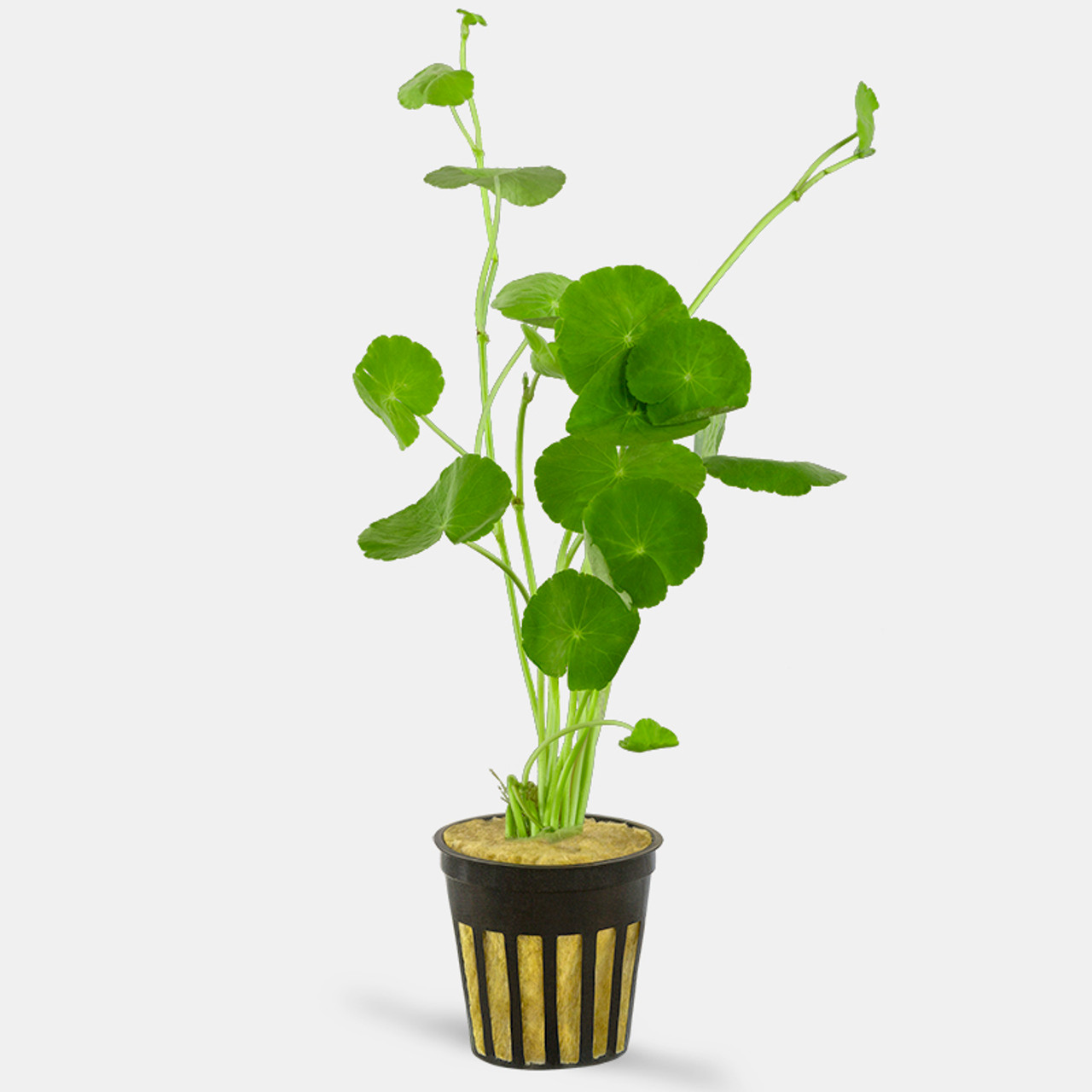
Description
Brazilian pennywort is a popular and relatively easy-to-care-for aquatic plant that can add a beautiful touch to your freshwater aquarium or paludarium.
Here’s a breakdown of its care requirements:
1. Planting
- Brazilian pennywort is adaptable and can be either planted in the substrate or allowed to float freely in the water.
- When planting, place healthy stems directly into the substrate, about 1-1.5 inches deep.
- Be gentle, as the roots are fine and delicate.
- If floating, simply place the stems on the surface of the water.
- For paludariums, the plant thrives in both submerged and emersed conditions.
2. Lighting
- Brazilian pennywort prefers moderate to high lighting for robust growth and vibrant color.
- However, it can tolerate lower light conditions, but growth may be slower and less dense.
- Aim for 8-12 hours of light daily, using a quality LED light or specialized plant bulbs for optimal growth.
3. Water parameters
- Temperature: 68-82°F (20-28°C)
- pH: 6.0-7.8
- Hardness: Adaptable to a wide range, but grows best in freshwaters with a hardness between 4-18 GH.
- Water Flow: Gentle surface agitation is ideal when floating.
4. Substrate and nutrients
- While not strictly necessary as it can absorb nutrients from the water column, a nutrient-rich substrate or regular liquid fertilizer dosing can promote faster and bushier growth.
- Brazilian pennywort mainly feeds through its leaves, so liquid fertilizers are recommended over root tabs.
- Pay attention to signs of nutrient deficiencies, such as yellowing leaves (iron deficiency) or crooked roots (phosphorus deficiency), and supplement as needed.
- Brazilian pennywort can also help reduce nitrate levels in the tank.
5. CO2 supplementation
- CO2 injection is not strictly required, but it can significantly boost growth, particularly under higher light conditions.
6. Pruning and propagation
- Brazilian pennywort grows rapidly and may need regular trimming to prevent it from overrunning the tank and shading out other plants.
- Trim stems using sharp aquascaping scissors to maintain a desired shape and density.
- Propagating Brazilian pennywort is easy: simply cut healthy stems or lateral shoots and replant them in the substrate or float them on the surface.
- The cuttings will typically sprout roots within a week or two.
7. Compatibility
- Brazilian pennywort is compatible with most fish species, but it’s best to avoid large digging fish like cichlids or goldfish, as they can uproot and damage the plant.
- It provides excellent cover and hiding spots for shy fish and fry.
8. Potential problems
- Melting: New plants transitioning from emersed to submerged growth may experience some leaf loss initially, which is temporary.
- Yellowing leaves: Often indicates iron deficiency, requiring chelated iron supplementation.
- Sparse growth: Can be caused by low lighting or insufficient nutrients.
- Overgrowth: Requires regular pruning to manage growth and maintain a balanced aquascape.
Reviews
There are no reviews yet.