

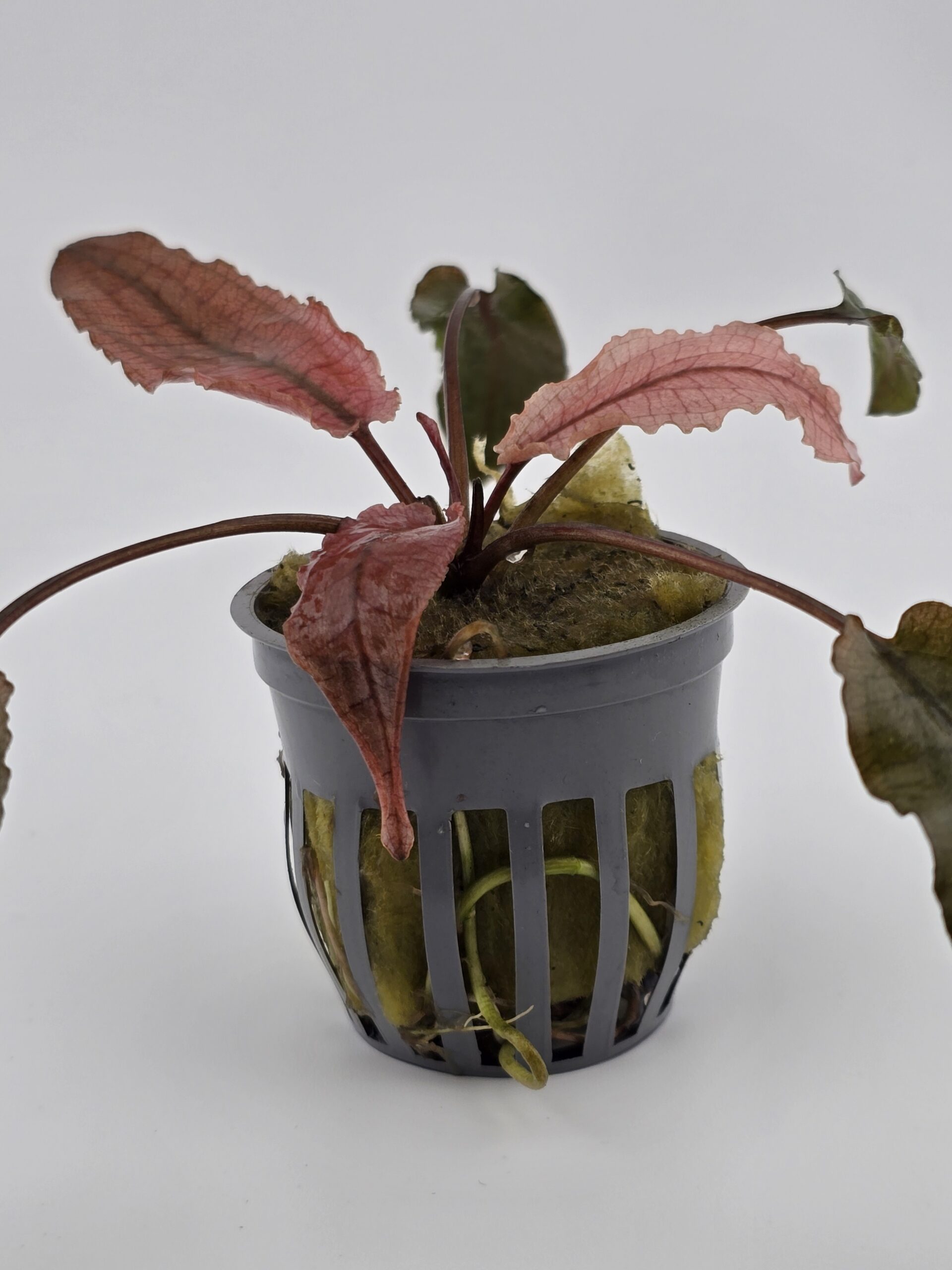
Description
To successfully grow the Flamingo Aquarium Plant (Cryptocoryne wendtii ‘Flamingo’), you must provide high-intensity lighting, a nutrient-rich substrate, and strict environmental stability. While standard Cryptocoryne species are famously beginner-friendly, the ‘Flamingo’ variant is a specialized cultivar that demands deliberate care to maintain its signature vibrant pink coloration.
1. Preparation and Planting Step-by-Step
-
- Unbox carefully: Most ‘Flamingo’ plants are purchased as pest-free tissue cultures.
- Wash away the gel: Gently rinse the clear agar growth gel or rockwool from the roots using lukewarm water.
- Separate into clumps: Carefully divide the plant mass into smaller individual plantlets using aqua-scaping tweezers.
- Anchor the roots: Press the roots firmly into the substrate.
- Expose the crown: Ensure the crown (the point where the leaves meet the roots) sits completely above the substrate to prevent rhizome rot.
2. Ideal Tank Parameters
-
- Lighting: Medium to high. Intense light (80 to 150+ umols of PAR) featuring a strong red/blue spectrum is mandatory to force the leaves to turn pink instead of a dull olive-green or brown.
- Substrate: High-quality aqua soil or a deep sand/gravel bed packed with iron-rich root tabs. This plant feeds aggressively through its root system rather than the water column.
- CO2 Injection: Highly recommended. While it can survive without it, consistent carbon dioxide dosing accelerates its incredibly slow growth rate and dramatically enhances leaf pigmentation.
- Water Chemistry: Keep the temperature between 72°F and 82°F (22°C–28°C) with a pH of 6.0 to 7.5. It prefers higher general hardness (above 4-5 dGH) and is highly tolerant of calcium-rich hard water.
3. Preventing “Crypt Melt” and Long-Term Care
- Do not move it: Once planted, leave it completely undisturbed. Moving smaller plants or shifting their position will shock them, triggering them to die back.
- Maintain total consistency: Sudden shifts in light intensity, fertilization schedules, or water parameters will cause the leaves to liquefy, a phenomenon known as “crypt melt”.
- Manage melting leaves: If leaves dissolve during initial tank acclimation, do not panic. Trim away the decaying foliage immediately to protect water quality; as long as the root structure remains healthy, new pink leaves will emerge within 4 to 6 weeks.
- Propagation: Over several months, a healthy mother plant will send out subterranean runners. Allow these baby plantlets to mature alongside the mother plant before cutting the connecting runner to relocate them

Reviews
There are no reviews yet.